A sauna heater that gets used consistently by an entire household needs to hit three practical marks on a limited budget: a temperature range wide enough to satisfy both a low-heat beginner and an experienced high-heat user, a control panel simple enough that anyone in the house can operate it correctly, and stones and clearances safe enough for supervised teenagers or older adults. The research on sauna use consistently links benefits to regular, repeated sessions, which makes a heater’s everyday usability, not just its peak output, the more important budget decision.
Why Consistency Matters More Than Peak Heat
Cohort research on sauna bathing, summarized in a 2018 Mayo Clinic Proceedings review of cardiovascular and other health benefits, links favorable associations to regular sessions taken over months and years rather than occasional high-intensity visits. A heater that intimidates half the household into skipping sessions, whether because the controls are confusing or the room runs uncomfortably hot for a beginner, works against the exact pattern the research points to. Choosing a unit with an adjustable, clearly labeled temperature range does more for long-term household use than chasing the highest kW rating available.
Matching Heat Range to Different Users
A digital control panel with a wide adjustable range, often roughly 120 to 190 degrees Fahrenheit depending on the model, lets a household split the difference between a spouse who prefers a gentler 30-minute session and a teenager or grandparent using the room at a lower, shorter setting. Analog dial heaters with a narrower practical range work fine for a single dedicated user but tend to push everyone else toward the same intensity, which is part of why they see less use once the novelty wears off in a shared household.
Safety Details That Matter With Multiple Users
A heater guard that fully encloses the stones and element reduces accidental contact burns, which matters more in a household with kids or older adults using the room than in a single-user setup. Checking the manufacturer’s clearance specifications from benches and walls, and confirming the unit includes a timer with automatic shutoff, adds a real safety margin for a room that different people, with different levels of familiarity, will be using without close supervision every time.
What a Budget-Friendly Household Heater Actually Costs
Household-friendly electric heaters with a wide adjustable range and full guard tend to sit in the middle of the market rather than the cheapest tier, since the extra control hardware and safety features add real cost over the most basic single-setting units. Comparing options across kW rating, guard style, and control type, including what one specialty retailer lists in its sauna heater lineup, is a reasonable way to see where that middle tier actually sits in current pricing before deciding whether the extra features are worth the difference for a household that will share the room daily.
Stones and Rock Load for Shared, Frequent Use
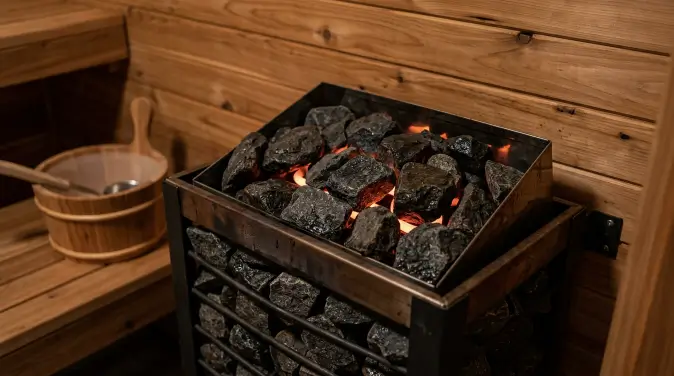
A heater used daily or near-daily by multiple people needs a proper full rock load, not a partial one, since stones absorb and release heat evenly only when the guard is loaded to the manufacturer’s specification. Dense volcanic stone, sized for sauna use rather than generic landscaping rock, holds up to the more frequent heat-and-water cycling a shared household heater sees compared to a heater used only occasionally by one person.
Setting Household Expectations From Day One
A short household orientation, covering how to set the timer, where the water bucket lives, and a simple rule about not adding water beyond a set amount per session, prevents most of the friction that causes a shared heater to fall out of regular use. Families who skip this step often end up with one person managing the room for everyone else, which quietly shrinks how often the sauna gets used compared to a setup where everyone understands the basics.
Where a Household Heater Fits Into the Rest of the Budget
A heater built for shared, frequent use is not usually the cheapest unit on a comparison chart, but it is worth weighing against the alternative of buying a bare-bones single-setting heater and then replacing it once the household outgrows its limits. Factoring in the guard, control panel, and adjustable range as part of the initial purchase, rather than as an upgrade considered later, tends to be the more budget-friendly path over several years of regular family use.
See also: Cold Plunge vs Ice Barrel: 6 Options Ranked for People Who Will Actually Use One
A Simple Way to Narrow Down Options
Start with the room’s required kW range based on its cubic footage, then filter down to units in that range with a digital, clearly labeled control panel and a fully enclosed guard, since those two features do the most to make a heater genuinely usable by different people in the same household. From there, comparing warranty length and stone capacity between the remaining options is a reasonable tiebreaker, since a heater used daily by several people benefits from a warranty that assumes more frequent cycling than an occasional single-user setup would need.
Getting Buy-In From Every Age Group in the House
A heater picked without input from everyone who will actually use it, kids old enough to sit in with a parent, a partner who prefers a shorter session, or a grandparent visiting regularly, tends to satisfy whoever chose it and frustrate everyone else. A short conversation about preferred temperature range and session length before ordering, rather than after the heater is installed, avoids the common outcome where one household member quietly stops using a room that no longer fits their comfort level.
Frequently Asked Questions
What makes a sauna heater good for a whole household?
A wide, clearly adjustable temperature range, a fully enclosed guard, and a timer with automatic shutoff let different family members use the same heater safely and comfortably at their own preferred intensity.
Does research support using a sauna regularly as a family?
Cohort studies link favorable cardiovascular associations to regular, repeated sauna sessions over time, which is one reason a heater that is easy and comfortable for everyone in the household to use consistently matters more than peak output alone.
Is a digital control panel worth the extra cost over an analog dial?
For a shared household heater, often yes, since a wider adjustable range lets different users set their own comfortable temperature rather than everyone defaulting to one fixed intensity.
How often should stones be checked on a heater used daily?
A heater in frequent household use should have its stones checked every few months for cracking or grit buildup, since more frequent heat-and-water cycling wears stones faster than occasional single-user use.
References
- Cardiovascular and Other Health Benefits of Sauna Bathing: A Review of the Evidence, Mayo Clinic Proceedings, 2018
- Does the Combination of Finnish Sauna Bathing and Other Lifestyle Factors Confer Additional Health Benefits? A Review of the Evidence, Mayo Clinic Proceedings, 2023
- Effects of heat and cold on health, with special reference to Finnish sauna bathing, American Journal of Physiology, 2018
By Paige Sutterfield